Simply explained: Incontinence types and stages
Pain, a feeling of pressure or even problems urinating can indicate a tense pelvic floor. MyPelvi tells you what you can do to relax your pelvic floor again.


Pain, a feeling of pressure or even problems urinating can indicate a tense pelvic floor. MyPelvi tells you what you can do to relax your pelvic floor again.
Do you know the feeling that something is wrong in your abdomen? Pain, a feeling of pressure or even problems urinating can indicate a tense pelvic floor. Many people don't know that our pelvic floor can be just as tense as a stiff neck. However, the symptoms are often non-specific and range from pain to bladder problems. MyPelvi therefore tells you how a tense pelvic floor manifests itself, what causes it and, above all, what you can do to relax your pelvic floor again.
A tense pelvic floor can have many causes, both physical and psychological. Here are 10 reasons why the pelvic floor can be tense or overloaded:
Emotional stress such as stress or fear can cause the muscles in the pelvic floor area to tense up permanently. When you feel threatened, the pelvic floor often reacts with an unconscious contraction. The reason: It is closely connected to the autonomic nervous system, which is responsible for the "fight or flight" response, and the psoas (the largest muscle in the body that connects the upper and lower body [2].
During pregnancy and after a vaginal birth, the pelvic floor can be stressed and sometimes overloaded by the additional pressure on the pelvic region. A difficult birth or birth trauma can also cause the pelvic floor muscles to tighten to protect themselves from further injury.
Poor posture can lead to uneven strain on the pelvic floor. Long-term poor posture, such as sitting on hard chairs or lifting loads incorrectly, can cause chronic tension in the pelvic floor muscles.
MyPelvi tip: A balance cushion or an ergonomic desk chair can relieve the strain on your pelvic floor and protect you from poor posture. It is even better to get up regularly.
Chronic pelvic pain, such as that associated with conditions such as fibromyalgia, can lead to constant tension in the pelvic floor. The muscles often react to pain by unconsciously tensing. This tension can make your pain even worse.
Be careful not to do too much of a good thing! Training that is too intense or improper, especially with exercises such as squats or leg presses, CrossFit or other activities that put strain on the pelvic floor, can lead to overexertion and tension in the pelvic floor muscles.
Hormonal fluctuations, such as those that occur during pregnancy, after childbirth or during menopause, can affect the tone and elasticity of the pelvic floor. In particular, a lack of estrogen after menopause can lead to pelvic floor dysfunction and cause pain.
Injuries to the pelvic area, such as after an operation or an accident, can lead to scar tissue and hardening of the muscles. The pelvic floor can become tense, especially if the muscles or tissue are affected.
Being overweight puts a strain on the pelvic floor, as it is constantly under pressure due to the extra weight. An unbalanced diet that leads to digestive problems such as constipation can also contribute to the pelvic floor being constantly tense, as frequent straining during bowel movements increases the pressure on the pelvic floor muscles.
Pelvic floor tension can have not only physical causes, but also physical ones. People who have experienced sexual trauma or abuse often show tension in the pelvic floor area as a defense mechanism. The body reacts to traumatic experiences by tensing muscles, especially in the pelvic floor area, which can lead to permanent tension [2].
Did you know that even incorrect breathing can lead to tension in your pelvic floor? Shallow breathing, where you only breathe into the upper chest area, can lead to tension in the pelvic floor muscles. Allow your pelvic floor to relax by breathing deeply into your stomach so that your abdominal wall rises and falls. The diaphragm is the counterpart to your pelvic floor. Both muscle groups should be able to move when you breathe in and out to prevent tension.
The causes of a tense pelvic floor are varied and can include both physical and emotional aspects. It is important that you give your pelvic floor the support it needs now.
With the pelvic floor training from MyPelvi, for example, you can achieve targeted tension and relaxation without having to exert yourself. Take advantage of the innovative magnetic wave technology and relax your pelvic floor sustainably:
Get your MyPelvi trial training now
Are you wondering what symptoms indicate a tense pelvic floor? A tense pelvic floor can manifest itself in many different ways, as the pelvic floor muscles play a central role in the function of the bladder, bowel, sexual organs and even in relation to posture.
Unlike pelvic floor weakness, which is often easy to recognize, people with a tense pelvic floor show a wide range of non-specific symptoms. These symptoms can significantly impair quality of life [1].
Including:
A tense or overworked pelvic floor often feels as if the area is under constant tension. Symptoms such as pain, a feeling of pressure and limited mobility can occur.
If you are familiar with such sensations, targeted pelvic floor training such as that offered by MyPelvi can help you consciously relax and strengthen your pelvic floor:
Get your MyPelvi trial training now
If your pelvic floor is tight, you'll often notice that your pelvic floor feels hard or rigid. You may even notice that movements or positions that are meant to promote relaxation become uncomfortable or painful.
Test yourself whether your pelvic floor is tense:
With a simple exercise and observation, you can find out if your pelvic floor is under tension. Take a quiet moment, retreat to a quiet place and try the following:
This test will help you feel the natural movement of your pelvic floor while breathing:
You should pay attention to this:
If you don’t notice any change or feel like your pelvic floor remains “tight,” this could indicate tension.
You can also look out for signs in everyday life that indicate a tense pelvic floor.
Observe:
With these tests, you can find out for yourself whether your pelvic floor is tense. If you are unsure or experience more severe symptoms, it is advisable to consult an expert.
The easiest way: Secure your trial session at MyPelvi and receive an individual movement analysis for your pelvic floor from our pelvic floor experts:
Get your MyPelvi trial training now
Is your pelvic floor tense? Don't worry, there are a few helpful tips that can help you relieve unpleasant symptoms, relieve tension and relax your pelvic floor again.
Breathing plays a crucial role in relaxing the pelvic floor. By breathing deeply and consciously into your abdomen, you can actively relax your pelvic floor.
Stretching exercises and targeted movements can help to relax the pelvic floor and loosen the muscles. For example, lie on your back and pull each knee towards your chest in turn. This movement loosens the muscles in the pelvic area and promotes relaxation.
Heat helps to relax the muscles and relieve tension. For example, take a warm bath or place a heating pad on your lower back and pelvic area to loosen the muscles.
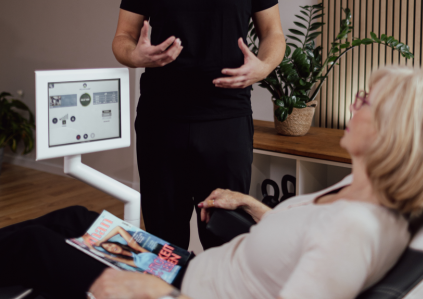
A specialized training program can help to relax and strengthen the pelvic floor. Through targeted training with the MyPelvi pelvic floor chair, for example, you can take advantage of the 25.000 magnetic wave impulses per 22-minute session. They penetrate into the deepest layers of your pelvic floor and relieve tension there.
Book your trial session at the location of your choice. Discreet, effective and professional support:
Get your MyPelvi trial training now
Since stress is often one of the main causes of pelvic floor tension, it can help to reduce stress. For example, plan mindfulness exercises or moments in nature to promote relaxation.
Overexertion and too much pressure on the pelvic floor (e.g. when lifting heavy loads) can increase tension. But sitting for long periods or standing without breaks can also put strain on your pelvic floor.
Various positions can help relax the pelvic floor. Here are some that are particularly effective:
Get into a quadruped position with your hands under your shoulders and your knees under your hips. Inhale and arch your back downward while letting your pelvic floor sink down. Exhale and arch your back by rounding your back and lifting your pelvic floor. This movement opens the pelvic area and promotes a gentle stretch and relaxation of the pelvic floor.
Sit on the floor with the soles of your feet together and your knees falling outwards. Place your hands on your thighs and breathe deeply as you bend your upper body slightly forward to stretch the pelvic floor. This position helps open the hips and relax the pelvic floor by reducing pressure.
Bend your knees, sit on your heels and bend your upper body forward so that your forehead touches the floor. Your arms can be stretched out in front of you or along your body. This position promotes relaxation of the entire body and stretches the lower back and pelvic area.
Lie on your back and place your feet on the floor. Gently bend your knees outwards and breathe deeply as you roll your pelvis back and forth in small, circular movements. This movement loosens the lower back and pelvic floor area and can help to release tension.
All of these positions are designed to relieve pressure on the pelvic floor and bring it into a relaxed state. Try them out and find out which one works best for you!
A tight pelvic floor can actually put pressure on the bladder. The pelvic floor muscles and the bladder work together to maintain normal bladder function. Tight pelvic floor tissue can
pressure in the pelvic area and lead to bladder dysfunction.
If the pelvic floor muscles are too tight or cramped, this can lead to various problems such as overactive bladder. This can mean that you experience a frequent or sudden urge to urinate or can even become incontinent.
A tense pelvic floor can also make it difficult to empty the bladder completely because the muscles are unable to relax properly. This can lead to a feeling of incomplete bladder emptying. If the pelvic floor is very tense, it can even cause pain or discomfort when urinating because the pressure on the bladder is increased.
Sometimes medication may be necessary, especially if the tension is very severe or has become chronic. Muscle relaxants or mild painkillers can help in consultation with a doctor.
But: medication is not a permanent solution – in the long term, only targeted relaxation and effective pelvic floor training will bring real relief. See for yourself and book your trial session at MyPelvi now:
Get your MyPelvi trial training now
A tense pelvic floor can not only lead to discomfort and pain, but also to bladder problems such as incontinence. Through conscious breathing, more relaxation, less overexertion and targeted training with MyPelvi, you can get a tense pelvic floor and its symptoms under control. Your pelvic floor may be tense, but it doesn't have to stay that way!
1)https://www.sciencedirect.com/science/article/abs/pii/S0025619611000243
2)https://instepp.uni.opole.pl/en/platforma-edukacyjna/artykuly/consequences-of-high-tension-in-the-pelvic-floor/