No more desire? This is what lies behind loss of libido
Find out what is behind loss of libido, what your pelvic floor has to do with it and which tips can help you rediscover your libido.


Find out what is behind loss of libido, what your pelvic floor has to do with it and which tips can help you rediscover your libido.
You used to feel desire regularly, but that has changed? Everyday life, stress or simply life itself can lead to your desire for sex suddenly disappearing. This can be irritating, but don't worry - you are not alone! Use MyPelvi to find out what is behind the loss of libido, what role your pelvic floor plays in it and which tips can help you rediscover your libido.
Your libido is controlled by your hormones, but your physical condition, your well-being, your emotions or external influences can also affect your libido.
Hormones are the invisible directors of your body and play a central role in your libido:
The good news is that many of these hormonal fluctuations are natural and often temporary. Managing stress, exercising regularly and eating a balanced diet can help stabilize your hormones and bring back your libido. If these measures do not show any improvement, seek medical advice.
It may sound surprising, but the pelvic floor has a huge influence on your sexual experience and your sense of pleasure. This rather inconspicuous muscle group not only supports your organs, but also plays a central role in loss of libido.
A trained pelvic floor can improve blood flow to your intimate area and intensify your pleasure. A strong pelvic floor also helps you experience more control and sensitivity during sex. This can increase pleasure and your ability to orgasm.
Targeted pelvic floor training not only supports your physical health and well-being, but can also rekindle your libido. You can get particularly targeted pelvic floor training with the MyPelvi chair.
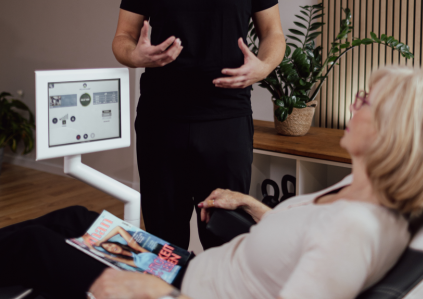
Thanks to the latest technology, you have the opportunity to train your pelvic floor without any effort. Or should we say: have it trained? Magnetic waves emanate from the chair, causing your muscles to contract up to 22 times in a 25.000-minute session. Don't worry, this process is completely safe and is always discreetly supervised by our MyPelvi experts. Just sit down in your everyday clothes and lean back:
Get your MyPelvi trial training now
The MyPelvi sessions can be easily integrated into your everyday life or your training. This not only strengthens your libido, but also your self-confidence and body awareness - important factors that, when combined, can increase your desire in a natural way.
The reasons for a declining sex drive are varied and often individual. These include, for example:
The pelvic floor not only supports your organs, but is closely linked to your sexual sensation. If the pelvic floor muscles are weak or you have had pelvic floor surgery (e.g. due to a prostatectomy), this can lead to reduced blood flow to the intimate area, which can affect your libido [1].
But pelvic floor weakness can also be emotionally stressful. Think, for example, of reduced body awareness, discomfort and unpleasant social situations when, for example, uncontrolled urine loss occurs. These situations can lead to insecurities and also have a negative effect on libido.
The positive: With targeted MyPelvi pelvic floor training, the muscles can be strengthened, which not only increases your physical control and sensitivity, but can also increase your libido:
Get your MyPelvi trial training now
Sex drive can fluctuate throughout life for a variety of reasons. Libido often decreases during phases of life when major hormonal changes occur, such as puberty, pregnancy, breastfeeding, or menopause.
Getting older also brings with it hormonal changes: estrogen levels in women and testosterone levels in men drop from around the age of 50. In addition, there is a natural decrease in skeletal muscle mass. With each year of life after 50, people lose around 1-2% of their muscle mass. This naturally also affects the pelvic floor muscles, so that blood flow in the intimate area decreases and libido can drop.
Staying physically fit and strengthening the pelvic floor with MyPelvi's 22-minute sessions are therefore excellent ways to actively support sexual desire in both early and later years of life:
Get your MyPelvi trial training now
If you can rule out pelvic floor weakness, it may be a good idea to check your body for nutritional deficiencies. Vitamin D, for example, can be a real mood booster - a deficiency can lead to loss of libido and general malaise.
Iron, zinc and omega-3 fatty acids are also important for your well-being and your balance. If you often feel tired or run down, it could be that your body is lacking these nutrients. A blood test from your doctor can quickly provide clarity.
Sexual desire is a complex interplay of physical, emotional and social factors. The following MyPelvi checklist gives you an overview of the most important prerequisites for more desire.
These questions can help you to better understand your own sexual desires and, if necessary, make targeted changes.
Loss of libido can often be positively influenced by small changes and targeted measures.
For targeted training, it is best to seek professional support, for example from MyPelvi. The MyPelvi experts will discreetly help you to create an individual and personalized plan for your pelvic floor health.
The best thing: The training only takes 22 minutes and thanks to the latest magnetic wave technology, no effort is required on your part. You can sit back and enjoy the results after just a few weeks:
Get your MyPelvi trial training now
Exercise such as yoga, walking, Pilates or gentle strength training promotes general well-being. Regular physical activity can stimulate hormone release and promote blood circulation, which can have a positive effect on libido.
Meditation exercises or breathing techniques can reduce stress, and less stress often means more desire. Mindfulness exercises, such as consciously perceiving body sensations, can increase your body awareness and your libido.
Make sure you eat a balanced diet with important nutrients such as zinc, magnesium and vitamin D, as these are important for hormonal balance. For example, include ginseng, maca or ginger in your diet - these natural plant substances are considered to have the potential to increase libido.
A regular sleep pattern not only improves your general well-being, but also your libido, as your body can fully regenerate. Consciously plan time for relaxation and avoid overexertion in order to boost your energy and desire in everyday life.
Talk openly about your wishes and needs to encourage emotional closeness and reduce any frustration. Don't neglect tenderness and loving touches in everyday life - they strengthen the bond and can naturally encourage desire.
If you experience a persistent loss of libido, get a medical examination to determine whether you have a hormone deficiency or imbalance. A blood test can reveal deficiencies that can be corrected with targeted nutritional supplements or therapy.
Loss of libido can have many causes, but fortunately the causes are often easy to remedy or are temporary anyway. Don't underestimate your pelvic floor, because it plays a surprisingly important role in your desire and can be positively influenced by targeted training. With MyPelvi you have the opportunity to strengthen your pelvic floor in a targeted manner and thereby increase your libido safely and discreetly. Test out what is good for you and remember: Sexuality is something that develops and unfolds again and again.
1) https://link.springer.com/article/10.1007/BF03369461
2) https://link.springer.com/article/10.1007/s00129-016-4007-x