What is the pelvic floor?
In short: The pelvic floor is a layer of muscle and connective tissue in the lower pelvis. It supports the internal organs, controls the bladder and bowel and is involved in stability and sexual function, in both women and men. And: it can be trained.
- For women & men
- Explained clearly
- Just 22 minutes
- Free first appointment
Note: This guide is general information and is no substitute for medical advice.
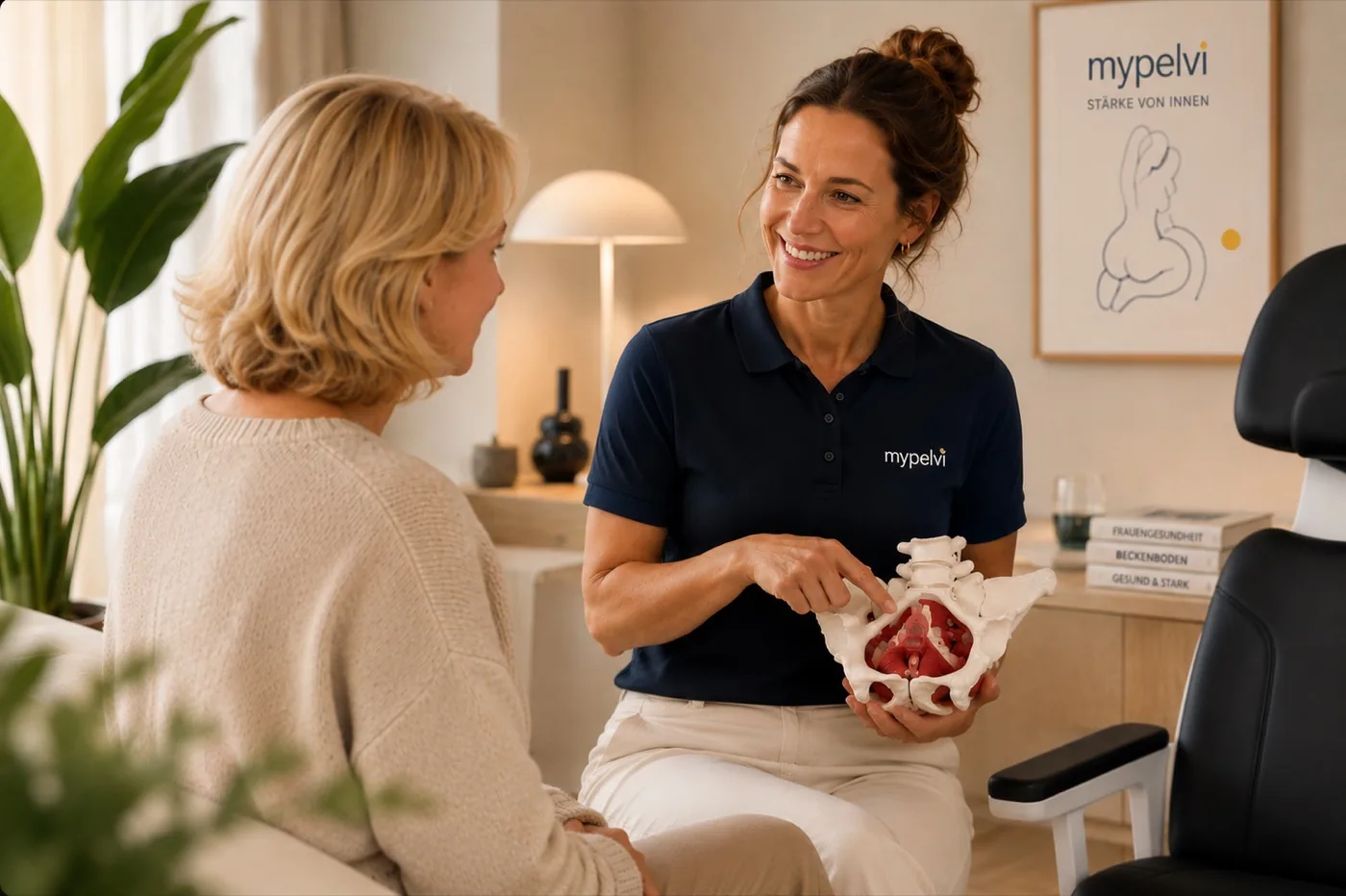
A hammock of muscle
Picture the pelvic floor like a hammock stretched between the pubic bone, the tailbone and the sitting bones. This layer of muscle and connective tissue closes the pelvis at the bottom and carries the organs above it: bladder, bowel and, in women, the uterus. At the same time, it lets go in a controlled way when needed.
Holding, closing, tensing
Holding
Supports the bladder, bowel and, in women, the uterus against gravity.
Closing
Keeps the urethra and bowel securely closed: the basis for continence.
Tensing & relaxing
Responds to pressure (coughing, lifting) and is involved in sexual function.
Stabilising
Works together with the abdomen and back as part of your core.
You can barely feel your pelvic floor? That is normal: Learn to feel your pelvic floor.
Why it weaker can become
Pregnancy and birth, hormonal changes (e.g. during menopause), excess weight, a chronic cough, heavy lifting, lack of exercise or operations such as prostate surgery can strain the pelvic floor. Signs such as involuntary urine loss or a feeling of pressure should be clarified with your doctor and can often be supported with targeted training.
Basics clearly explained.
What is the pelvic floor?+
What tasks does the pelvic floor have?+
Do men and women have a pelvic floor?+
What weakens the pelvic floor?+
Can the pelvic floor be trained?+
Why can I barely feel my pelvic floor?+
What does a first session at MyPelvi cost?+
Read on: Learn to feel your pelvic floor · How MyPelvi works →
Find your MyPelvi studio.
Get to know your pelvic floor .
No commitment, fully clothed and in just 22 minutes: the easiest way to start building a strong core.