Yoga & the pelvic floor: can the mat strengthen your power centre?
MyPelvi explains whether yoga alone is sufficient as pelvic floor training to activate your core.
Katharina Heilen · 7 January 2026
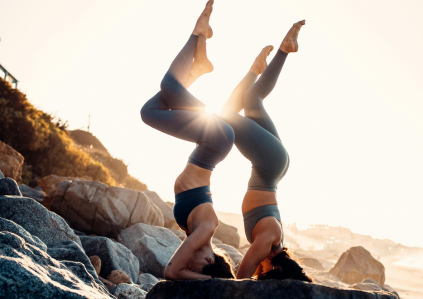
Whether as a gentle way to balance everyday life, a method of managing stress or a holistic body workout, yoga inspires many people around the world. But what many do not know is that the pelvic floor is often involved in yoga too, whether consciously or unconsciously. And that is exactly where things get interesting, because the pelvic floor is more than a “silent participant”. It plays a central role in continence, posture, stability and inner balance, both physically and mentally. But is yoga enough to train these muscles in a targeted way? MyPelvi explains how yoga can affect your pelvic floor, which exercises are useful and what you should pay attention to – and whether yoga alone is sufficient pelvic floor training to activate your core.
What yoga has to do with the pelvic floor
The pelvic floor is a muscular structure consisting of several layers that stretches across the pelvis like a trampoline. It stabilises organs, supports continence and plays a central role in posture, breathing and core stability. What many people do not know is that this area is regularly activated during yoga too.
How yoga affects the pelvic floor
✓ Indirect activation In many yoga poses, the pelvic floor is not contracted directly but is engaged through work with the core. The pelvic floor is part of the muscle chain, especially during exercises that focus on alignment, balance or controlled breathing.
✓ Breathing as the key. Conscious, deep breathing in yoga (particularly when combined with diaphragmatic breathing) affects the pelvic floor. When you breathe in, the diaphragm lowers, and the pelvic floor lowers with it. When you breathe out, the pelvic floor may contract slightly as a reflex. Anyone who understands and consciously uses this can promote body awareness and coordination through yoga.
✓ Relaxation rather than just contraction. Many people associate pelvic floor training primarily with contracting the muscles. But the ability to let go is also crucial, particularly for overactive or tense pelvic floors. Gentle yoga can help promote this relaxation.
What yoga does not do
✕ No targeted muscle building Yoga is not structured strength training for the pelvic floor. Muscle activity often remains too low to strengthen the pelvic floor in a targeted way, particularly in cases of symptoms such as incontinence or instability, or after childbirth.
✕ No therapeutic intervention. For functional or structural pelvic floor problems, yoga is not a substitute for an individually tailored training programme. Yoga can help you become consciously aware of the pelvic floor, improve its coordination and promote relaxation.
However, anyone wishing to strengthen the pelvic floor in a targeted way or specifically address symptoms needs training that specialises in these deep muscles – such as training with the MyPelvi chair.
Ready to begin?Book a no-obligation MyPelvi trial session now
Good or too much?
Yoga for pelvic floor problems Yoga is considered gentle, mindful and beneficial to health – and in many cases, this is true. However, if you already have pelvic floor problems such as prolapse, incontinence or pain in the pelvic area, mindfulness is essential.
Take care with these asanas
✕ Boat pose (Navasana), planks held for a long time or intensive abdominal exercises, as they generate high intra-abdominal pressure that can affect a weakened or already strained pelvic floor.
✕ Inversions such as shoulder stand (Sarvangasana), plough pose (Halasana) or headstand (Sirsasana), as these poses shift weight towards the pelvic floor and can increase pressure.
✕ Jumping movements or dynamic transitions between poses, as sudden changes in pressure and impact movements can further irritate unstable pelvic floor structures.
✕ Deep squat (Malasana), as it can have a relaxing effect, but may also be counterproductive in cases of existing pelvic floor prolapse or instability if it is performed incorrectly or held for too long.
✕ Asanas involving substantial backbends (e.g. cobra, wheel, camel), as intensive backbends stretch the front of the body and can exert pressure on the pelvis through the abdominal muscles.
These asanas can have a positive effect on the pelvic floor
Exercises that promote deep abdominal breathing and are linked to conscious exhalation can be particularly helpful in coordinating the natural upward and downward movement of the pelvic floor with the diaphragm.
Asanas that lengthen the spine in a healthy way often also promote reflexive contraction of the pelvic floor without exerting direct pressure on the pelvic organs. Gentle stretches of the hip and pelvic region can help restore function to tense adductors, shortened hip flexors or immobile gluteal muscles.
Yoga for pelvic floor problems can provide support, particularly when the exercises are adapted to the individual's situation and focus on awareness, breathing and relieving strain. Specially designed training such as MyPelvi can be a useful complement for targeted, structured activation of the pelvic floor muscles.
Ready to begin?Book a no-obligation MyPelvi trial session now
Yoga or Pilates: which is better for the pelvic floor?
Both yoga and Pilates are considered gentle forms of training that promote body awareness, posture and the deep muscles. Both can generally have a positive influence on the pelvic floor muscles, but in different ways. The key question is therefore not “Which is better?”, but rather “Which suits your goal and your body?”
What Pilates can do for the pelvic floor
Pilates is based on a precise training concept that specifically targets the deep core muscles (including the pelvic floor). Through controlled movement, conscious breathing and activation of the so-called “powerhouse” zone (consisting of the pelvic floor and deep abdominal and back muscles), the pelvic floor is specifically integrated into many exercises.
What yoga can do for the pelvic floor
Yoga strengthens the pelvic floor more indirectly: through breathwork, postural awareness and relaxation techniques. Yoga can be helpful for reducing tension and improving awareness of the core, particularly with overactive or tense pelvic floors. However, yoga is not a targeted form of pelvic floor training, because muscular activation often remains below the threshold required for structural muscle growth.
Yoga and Pilates can support your pelvic floor in different ways. But if you have symptoms or want targeted activation, complementary pelvic floor training with controlled muscle activation can be worthwhile – as offered by MyPelvi, for example.
Ready to begin?Book a no-obligation MyPelvi trial session now
Is yoga a Kegel exercise?
No. Yoga is not a Kegel exercise, but it may contain elements that indirectly activate or relax the pelvic floor. Kegel exercises are targeted, isolated contraction and relaxation exercises for the pelvic floor muscles. They were developed by gynaecologist Arnold Kegel in the 1940s and have since been regarded as a classic method for strengthening the pelvic floor muscles.
Yoga, by contrast, is a holistic exercise system that combines postures (asanas), breathing techniques (pranayama) and mindfulness. The pelvic floor is integrated into some movement and breathing sequences, body awareness is promoted and a conscious posture is adopted. However, this neither trains the pelvic floor in isolation nor challenges it with the intensity of classic Kegel exercises.
Yoga is not a substitute for Kegel exercises; at best, it can complement them. Anyone who wants to activate their pelvic floor in a targeted way or address functional problems can do so with specialised pelvic floor training, such as MyPelvi.
Ready to begin?Book a no-obligation MyPelvi trial session now
Conclusion: yoga for the pelvic floor?
Yoga can be a valuable companion on your journey towards greater body awareness and a more relaxed pelvic floor. But if you want to activate your pelvic floor, it needs targeted training like any other muscle. MyPelvi pelvic floor training allows you to activate your muscles using electromagnetic impulses. And yoga? It remains a wonderful way to find balance. Namaste and enjoy your training!
*Note: The MyPelvi chair does not replace medical therapy and is not a medical device. Depending on the individual situation, it can be used to support pelvic floor training.
Ready for your trial session?
Learn the right technique with guidance — free of charge at your MyPelvi studio.