Incontinent after giving birth? How to regain control
MyPelvi shows you how you can support your pelvic floor to regain full control after childbirth.
Katharina Heilen · 18 February 2025
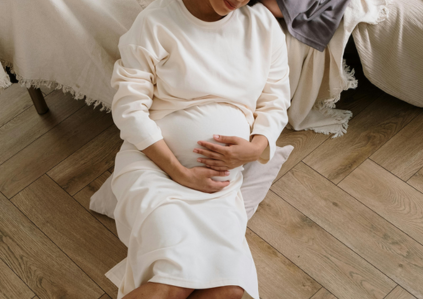
Life is turned upside down after giving birth: lack of sleep, full nappies and so much love. But what often gets lost in all the hustle and bustle are the challenges your own body faces – and which it sometimes cannot manage entirely on its own. Incontinence or pelvic floor problems affect many women, yet hardly anyone talks about them. It is completely normal for your body to need time and support to recover. MyPelvi shows you how you can support your pelvic floor to improve control.
Incontinent after childbirth: these are the reasons
Have you recently had your baby and now occasionally leak a few drops of urine, e.g. when sneezing, coughing or lifting? Or have you heard about incontinence after giving birth and wonder whether it is true? These are the reasons for incontinence after giving birth:
1) Stretching and overloading of the pelvic floor
During childbirth, the pelvic floor is stretched considerably to allow the baby to pass through. This can cause temporary weakening.
2) Injuries to muscles, ligaments and nerves
Childbirth can overstrain or injure these structures, which may impair pelvic floor function.
3) Long labors
A prolonged birth increases strain and fatigue in the pelvic floor, which raises the risk of incontinence.
4) Perineal tear
If the perineal tissue tears during childbirth, this can further weaken the pelvic floor.
5) Use of aids
The use of instruments such as a vacuum extractor or forceps places additional pressure on the pelvic floor and increases the strain.
6) Higher maternal age
As we age, tissue loses elasticity, making the pelvic floor more susceptible to strain [4].
7) Higher maternal BMI
Higher body weight places greater pressure on the pelvic floor, both during pregnancy and during childbirth [4].
8) Heavy baby
Babies with a higher birth weight put extra pressure on the pelvic floor, which increases the risk of damage.
9) Hormonal changes
Oestrogen levels fall after childbirth, causing pelvic floor tissue to become looser and lose stability.
These factors can influence whether you develop incontinence after childbirth or how severe your incontinence is. But do not worry, you are not alone in experiencing symptoms of incontinence after childbirth.
Is incontinence after giving birth normal?
Yes, absolutely! After childbirth, a weak pelvic floor is the rule rather than the exception, and if left untreated, the symptom of incontinence can persist even years later [2].
After all, this muscle has performed an extraordinary feat during pregnancy and childbirth. Carrying the additional weight during pregnancy alone places enormous strain on the pelvic floor.
During childbirth itself, it is then stretched considerably – during a vaginal birth, even up to three times its normal length. This leaves its mark, and it is completely normal for the pelvic floor to need time to recover afterwards.
It is important not to leave your pelvic floor unsupported after childbirth and to support it actively. One study found that pelvic floor training, particularly among first-time mothers, leads to fewer symptoms of incontinence after childbirth [1].
Give your pelvic floor targeted support after childbirth with our 22-minute sessions and receive personalised advice from our MyPelvi pelvic floor experts:
Ready to begin?Book your no-obligation MyPelvi trial session now
What can I do about incontinence after giving birth?
MyPelvi knows that incontinence after giving birth can be distressing not only physically, but also emotionally. You may feel ashamed, withdraw and prefer not to leave the house at all. Fortunately, there are solutions that can help you quickly regain your former strength and full control.
Train your pelvic floor after giving birth – but do it correctly
Targeted pelvic floor training with MyPelvi is the most effective way to regain control over incontinence after birth. Even after just a few sessions on the MyPelvi chair, many women can already notice a difference. The reason? With the innovative magnetic field stimulation technology, your pelvic floor muscles are stimulated down to the deepest layers. In just 22 minutes per session, your muscles contract up to 25,000 times, allowing your pelvic floor function to recover quickly.
Pay attention to your posture
After childbirth, it is important not to overstrain your pelvic floor. Instead, it may help to avoid standing or sitting for too long and to avoid heavy lifting. Consciously activating your pelvic floor in everyday life, e.g. when bending down or changing nappies, can also help restore the function of your pelvic floor step by step.
Get help from professionals
You're not alone! Many women do not raise the issue of incontinence after childbirth at all, or only do so very late [3]. Yet incontinence after childbirth is no reason to feel ashamed; it is completely normal. During a no-obligation trial session with our MyPelvi pelvic floor experts, you will receive your personal plan. Based on a medical history assessment, you will learn the severity of your incontinence and which steps are best for you. Understanding, discreet, and available near you:
Be patient
We know that you want to feel an improvement as quickly as possible if you experience incontinence after giving birth. With MyPelvi, you receive the fastest, most effective and least strenuous solution for restoring your pelvic floor's function. But do not expect miracles: Your pelvic floor needs time to recover, especially after giving birth. With regular training and the right support, however, you will soon notice progress and be able to enjoy your life without restrictions again.
What should you do when everyday life becomes a challenge?
There are some temporary solutions for incontinence after childbirth that can bring relief in everyday life. Incontinence pads, for example, can help you feel secure after giving birth. They are specially designed to absorb liquid quickly and contain odours, helping you feel fresh and comfortable despite minor “accidents”.
Conclusion: strong after giving birth
Regaining a strong and stable pelvic floor after giving birth is a process that requires patience and regular training. Even if challenges such as incontinence occur in the weeks or months after the birth, there are effective measures that can help you strengthen your pelvic floor muscles and regain control. With targeted pelvic floor training from MyPelvi and the right posture, you may soon notice relief from the symptoms. Remember: Your body has achieved something remarkable – now it is time to restore its strength with gentle training and positive support.
References
- 1) 1) https://www.sciencedirect.com/science/article/abs/pii/S0029784497006728
- 2) 2) https://www.sciencedirect.com/science/article/abs/pii/S0029784497006728
- 3) 3) https://onlinelibrary.wiley.com/doi/abs/10.1046/j.1523-536x.1999.00164.x
- 4) 4) https://onlinelibrary.wiley.com/doi/abs/10.1046/j.1523-536x.1999.00164.x
Ready for your trial session?
Learn the right technique with guidance — free of charge at your MyPelvi studio.