Moving your pelvis: The importance of pelvic tilting
Learn how to recognise a pelvic tilt early and stabilise your posture with a free MyPelvi trial session.
Katharina Heilen · 13 October 2025
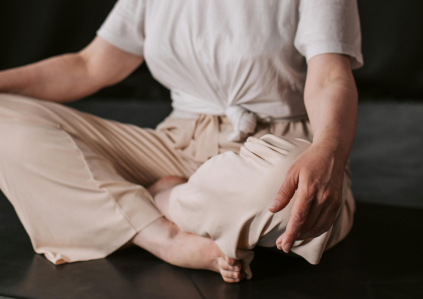
Have you ever heard of pelvic tilt? If your pelvis is not optimally aligned, this is also referred to as a pelvic tilt. It can lead to tension, back pain or pelvic floor problems. Learn from MyPelvi what role the pelvis plays in posture, mobility and the well-being of your back.
What is a pelvic tilt?
The pelvis moves constantly – whether walking, running, sitting, or standing. However, not every movement is beneficial. Poor pelvic tilt can cause discomfort, especially if there are muscle imbalances or misalignments present. Did you know that a poor pelvic tilt can even influence the alignment of your head and other body areas? [1] In the following, you will learn about the situations in which one speaks of a pelvic tilt:
1. Natural Pelvic Tilt through Movement
The pelvis tilts slightly forward or backward with every movement. This natural dynamic helps to balance loads and stabilize posture without any negative effects on your pelvic floor.
2. Misalignments and Muscle Imbalances
If certain muscles are too weak or shortened, the pelvis can get into an unfavorable position:
Anterior Pelvic Tilt (tilted forward) often occurs due to shortened hip flexors and a weakened abdominal muscle group. This exacerbates the lumbar curve and can lead to muscular tension that some associate with back pain.
Posterior Pelvic Tilt (tilted backward) frequently arises when the abdominal and gluteal muscles are dominant, while the lower back and hip flexors are weakened. This can result in a rounded back and muscle tension.
3. Lack of Movement and Prolonged Sitting
Many people spend most of their day sitting. Unconsciously, the pelvis often tilts backward, causing the spine to take on an unnatural curve. This can lead to muscle tension, back pain, and weakened core muscles.
4. Physical Misalignments and Asymmetries
One-sided loads, leg length differences, or scoliosis (a curvature of the spine) can cause your pelvis to remain tilted or misaligned permanently. This can result in lower back pain, hip pain, or knee pain.
Why is pelvic tilt important?
The position of the pelvis affects the posture of the entire body, particularly the spine, hips and pelvic floor muscles. A forward-tilted position increases the arch in the lower back and activates the lower back muscles while stretching the abdomen. A backward-tilted position relieves the lower back in the short term but can lead to tension over the long term.
An unconscious or unfavourable pelvic tilt often arises from muscular imbalances, weak core muscles or a lack of exercise. However, a functioning pelvic floor is crucial for stabilising and mobilising your pelvis in a targeted way.
MyPelvi training offers an innovative solution here. Using state-of-the-art magnetic wave technology, the pelvic floor muscles are activated down to the deepest layers. In just 22 minutes per session, the muscles contract up to 25.000 times. Many people perceive this stimulus as intense, and it can enhance awareness of the core.
Effective training that can be effortlessly integrated into everyday life:
Ready to begin?Book your no-obligation MyPelvi trial session now
The prevalence of pelvic tilt
A study shows how common pelvic tilt is among healthy people. The results are fascinating:
Only 9 % of men and 18 % of women have a neutral pelvic position.
85 % of men and 75 % of women have an anterior pelvic tilt (ventral pelvic tilt).
6 % of men and 7 % of women have a posterior pelvic tilt (dorsal pelvic tilt) [3].
The results show that only a few people have an optimally aligned pelvis and that almost everyone has a pelvic tilt. An anterior pelvic tilt is more common.
How do I know if I have a pelvic tilt?
You can check for yourself whether you have a pelvic tilt based on certain postures and symptoms or have it analysed professionally. Here are some options:
1. Self-test: check your posture in the mirror
Stand upright barefoot in front of a mirror and pay attention to the following points: Lumbar spine: A pronounced arch in the lower back indicates an anterior pelvic tilt. Pelvic height: If one side of the pelvis appears higher or lower, there may be a lateral pelvic tilt. Hip and abdominal region: If your lower abdomen appears to be pushed slightly forwards and your bottom protrudes further, this can also indicate an anterior pelvic tilt.
2. Self-test: feeling for the pelvic bones
Find the anterior superior iliac spines (ASIS): These are the two bony points at the front of your pelvis. Find the posterior superior iliac spines (PSIS): These are located higher up on your lower back. Compare their heights: Are the front points noticeably lower than the back points? → Anterior pelvic tilt Are they higher? → Posterior pelvic tilt
3. Mobility test: feel the pelvic tilt actively
While standing or sitting, consciously try tilting your pelvis forwards (arching your lower back) and backwards (rounding your back). If one movement feels particularly restricted or unfamiliar, this could indicate an unfavourable pelvic position.
4. Common symptoms of pelvic tilt
Anterior pelvic tilt: Arched lower back and increased pressure in the lower back Tense lower back muscles Shortened hip flexors and front thigh muscles Protruding abdomen despite a normal weight Gluteal muscles appear flat or not very active Posterior pelvic tilt: Rounded back or flat lower back Restricted hip mobility Pain or tension in the lower back and buttock area Weak abdominal and gluteal muscles
5. Professional analysis
If you would like to improve your pelvic position, targeted training may be able to help. Pelvic floor training with the MyPelvi pelvic floor trainer can help activate the muscles in the pelvic area in a targeted way and improve posture. During a no-obligation conversation with our pelvic floor experts, you can discuss your perception of your posture with them:
Is a pelvic tilt the same as pelvic asymmetry?
No, a pelvic tilt is not the same as pelvic asymmetry, but the two can be connected:
Pelvic tilt describes a movement of the pelvis forwards (anteriorly) or backwards (posteriorly). This movement is dynamic and can be controlled consciously, for example through mobilisation exercises or changes in posture. However, a persistent tilt (e.g. a pelvis tilted markedly forwards with an excessively arched lower back) can lead to muscular imbalances.
Pelvic asymmetry means that the pelvis is not aligned straight in its neutral position. One side may be higher or further forwards than the other. Possible causes include muscular imbalances, differences in leg length or poor posture. Pelvic asymmetry can also contribute to pelvic tilt or be exacerbated by an existing tilt.
In short, a pelvic tilt is a movement or postural tendency of the pelvis, while pelvic asymmetry describes a persistent, often structural misalignment of the pelvis.
Why is tilting the pelvis so important for a functional pelvic floor?
Especially people with a sedentary job often develop a misalignment of the pelvis – whether it's an increased lordosis or a tilted pelvis leading to a rounded back. Both misalignments can cause back pain, hip issues, and reduced mobility. Moreover, the position of the pelvis directly affects pelvic floor function. An unfavorable tilt can lead to over- or under-tension of the pelvic floor muscles, which in turn can affect bladder, bowel, and overall well-being.
What if you notice a pelvic tilt? A study has shown that even surgery may not make a difference and might require working with implants to correct a pelvic tilt [2].
Surgery is often not necessary. Often it's much simpler to naturally balance a pelvic tilt. Regular pelvic floor training can help strengthen the back muscles, mobilize the hip joints, and activate the pelvic floor. Those who pay attention to a healthy pelvic position over time may benefit from increased stability, flexibility, and well-being.
The MyPelvi Pelvic Floor Trainer can provide additional support. By delivering targeted impulses, it stimulates the pelvic floor muscles and is often found helpful for working on one's posture without effort in any situation.
Ready to begin?Book your no-obligation MyPelvi trial session now
How to perform pelvic tilts while sitting
One of the simplest ways to mobilise the pelvis is to perform pelvic tilts while sitting. You can do this exercise at home and complement it with MyPelvi pelvic floor training. Step-by-step guide: Pelvic tilts while sitting
Get into the starting position
Sit upright on a sturdy chair with your feet flat on the floor. Your knees should be bent at an angle of about 90 degrees. Keep your upper body relaxed but upright.
Tilt the pelvis forward (arching the lower back)
Slowly tilt your pelvis forwards by angling your pubic bone slightly downwards. Your lower back arches and your spine extends. Perform the movement consciously and in a controlled way without excessively arching your lower back.
Tilt the pelvis backward (rounding the back)
Move the pelvis in the opposite direction by gently pulling up on the pubic bone. Your lower back rounds, and you feel a gentle stretch in the lumbar spine. Your abdomen becomes slightly active.
Repeat Movement Smoothly
Move slowly and consciously between these two positions. Make sure the movement is even, without going into an extreme swayback or rounding your back too much.
Use your breathing consciously
Breathe in deeply as you tilt your pelvis forward, and breathe out as you move it back. Conscious breathing supports the movement and helps release tension.
Adjust repetitions
Perform the pelvic tilt 10–15 times or until you feel a pleasant release in your lower back. This exercise can be performed several times a day, especially if you sit for long periods.
Ready to begin?Book your no-obligation MyPelvi trial session now
Conclusion: Small movement, big impact
Pelvic tilt describes both the position or misalignment of your pelvis and a simple but effective method of mobilising your pelvis. Just a few minutes of conscious movement each day can make a noticeable difference.
For even better results: Try the MyPelvi pelvic floor trainer and experience how effortlessly you can strengthen your muscles.
Ready for your trial session?
Learn the right technique with guidance — free of charge at your MyPelvi studio.