Pelvic floor training & pregnancy
Pregnancy puts strain on the pelvic floor. Targeted training can help strengthen it before and after pregnancy.
Katharina Heilen · 15 July 2024
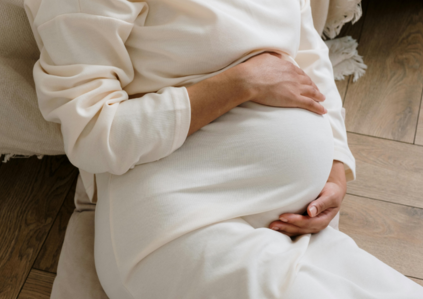
During or after pregnancy, your body changes. Although these changes are natural, some – including the effects on the pelvic floor – can be particularly unpleasant. One example is “leaking” when you laugh, sneeze, or exercise. Pregnancy puts strain on the pelvic floor. Targeted training can help strengthen it before and after pregnancy.
Note: This guide does not replace medical advice or diagnosis.
How does pregnancy affect the pelvic floor?
The pelvic floor is a group of muscles that support your bladder, uterus, and bowel. As the uterus grows, it puts more pressure on these muscles. Pregnancy hormones also loosen the tissue to prepare your body for birth. This can weaken the pelvic floor and lead to problems such as incontinence. The pelvic floor can also sustain temporary damage during vaginal delivery.
Around two in three women notice negative effects on how their pelvic floor functions during or after pregnancy, such as incontinence [3]. This connection has long been known, but interest in and awareness of it have increased significantly, especially in recent years.
One reason is that urinary incontinence as a medical condition has entered public awareness. Another is that more and more obstetric professionals are faced with requests for a C-section due to fear of pelvic floor damage [2]. Targeted pelvic floor training can help strengthen the muscles before and after pregnancy.
How important is pelvic floor training before, during and after pregnancy?
Pelvic floor training before, during, and after pregnancy has a positive effect on preventing incontinence. [4]. A well-trained pelvic floor can make childbirth easier and shorten the recovery period afterward. Training can also help you prevent incontinence and stay in control of your bladder.
Before pregnancy and around six to eight weeks after giving birth, you can use the most effective method of pelvic floor training: 22-minute sessions on the MyPelvi chair. This chair uses magnetic waves to trigger up to 25,000 muscle contractions per session. The magnetic waves stimulate the nerve network of your pelvic floor, reaching even the deepest muscle layers, without any effort on your part. While you lean back on the chair in your everyday clothes and enjoy some time to yourself, the impulses do the work for you and strengthen your pelvic floor.
The MyPelvi chair is not used during pregnancy — pregnancy is a contraindication for magnetic field therapy. Gentle manual exercises are beneficial during pregnancy; the MyPelvi chair is used before and after pregnancy. Discuss with your midwife which exercises are right for you now, and with MyPelvi's trained professionals when it is time to begin pelvic floor training after your pregnancy.
Ready to begin?Book a trial session now
Can I train my pelvic floor during pregnancy?
You can train your pelvic floor during pregnancy, although pelvic floor training with magnetic field therapy is not recommended. Gentle, manually performed pelvic floor exercises strengthen the muscles and prepare them for the strain that occurs during childbirth. Doctors and midwives can help you find the right training programme.
Can I use the MyPelvi chair during pregnancy?
Pregnancy is a contraindication for magnetic field therapy on the MyPelvi chair. It is useful beforehand as preparation and from approx. six to eight weeks after giving birth for postnatal recovery.
When should you start pelvic floor training?
As a general rule, the earlier you begin pelvic floor training, the better! Ideally, you should start before becoming pregnant. But do not worry if you begin later. You can start pelvic floor training at any time because it is beneficial at every stage of pregnancy and beyond!
Before pregnancy
If you are planning to become pregnant, it is ideal to start pelvic floor training or magnetic field therapy beforehand. This helps you strengthen the muscles and prepare as well as possible for the physical changes. Starting early means giving your body the best possible foundation. And the training has another benefit: Strengthening your pelvic floor can also allow you to experience sex more intensely and feel more desire.
During pregnancy
You can start training your pelvic floor with gentle pelvic floor exercises as early as the first trimester. Even if you start later, pelvic floor training is still very worthwhile. Pelvic floor training during pregnancy helps you keep the muscles strong and flexible. For example, it can help prevent incontinence and prepare your body for birth. During pregnancy, you should avoid magnetic field therapy to strengthen your pelvic floor and switch to gentle, manual exercises.
After giving birth
It is never too late to start pelvic floor training or to pick up where you left off. Pelvic floor training after pregnancy helps you rebuild the muscles and keep them strong over the long term. Have you already signed up for a postnatal recovery course? Great! We see MyPelvi training as a complement to the midwives' postnatal recovery courses. Ideally, you should start around six to eight weeks after giving birth, once your doctor or midwife gives you the go-ahead. After a caesarean section, the timing may vary slightly because the body needs to recover differently. It is best to seek medical advice about this.
In summary: When you can start pelvic floor training
Before pregnancy: Start magnetic field therapy as early as possible. During pregnancy: At any time, ideally from the first trimester, with gentle, manually performed pelvic floor exercises. After childbirth: Around six to eight weeks after childbirth, with magnetic field therapy in consultation with your doctor or midwife.
The exact timing varies from person to person. Please discuss when to start with your doctor or midwife, especially after a C-section, perineal injury, or complications.
Ready to begin?Recovery after birth
What does a weak pelvic floor feel like?
A weak pelvic floor can manifest in the following ways. But do not worry, these symptoms can often be managed well with targeted training:
Incontinence: One of the most common signs is that you leak urine uncontrollably and “dribble”, particularly when coughing, laughing, sneezing or during physical activities.
A feeling of pressure in the pelvic area: Some women describe a feeling of heaviness or as though something is pressing downwards. This feeling can become stronger, especially at the end of the day.
Pelvic pain: A weak pelvic floor can cause other muscles to become overloaded, which can lead to pain in the pelvic area.
Pain during sex: A weak pelvic floor can also make sexual intercourse uncomfortable. Some women report pain or reduced sensation.
If you notice one or more of these symptoms, it could be an indication that your pelvic floor needs support. But there is no need to worry! With targeted training such as the MyPelvi chair, you can strengthen your pelvic floor before pregnancy and after giving birth and regain control of your well-being. You can even strengthen your pelvic floor during pregnancy, although it is better to use gentle pelvic floor exercises without magnetic field therapy. If you have questions or are unsure about the best pelvic floor training, our specialists will be happy to help.
Ready to begin?Book a MyPelvi trial session
In summary: It is never too late to start pelvic floor training! Even if you only start after giving birth, you can make significant progress and alleviate symptoms such as incontinence. It is a bit like exercise: the earlier you start, the better, but it is never too late to do something good for your body. Only during pregnancy should you consult experts and support your pelvic floor with gentle exercises.
References
- 1) 1.https://www.thieme-connect.com/products/ejournals/abstract/10.1055/s-2001-20016
- 2) 2. https://www.proquest.com/openview/8260320532d635b7cd1f96c579ca5ef8/1?pq-origsite=gscholar&cbl=6629261
- 3) 3.https://www.researchgate.net/profile/Volker-Viereck/publication/351373771_Expertenbrief_No_75_Der_Beckenboden_wahrend_Schwangerschaft_Geburt_und_postpartal/links/6095364c458515d31503df00/Expertenbrief-No-75-Der-Beckenboden-waehrend-Schwangerschaft-Geburt-und-postpartal.pdf
- 4) 4.https://digitalcollection.zhaw.ch/handle/11475/9223
Ready for your trial session?
Learn the right technique with guidance — free of charge at your MyPelvi studio.