Pelvic floor anatomy: your invisible power muscle
MyPelvi explains the structure of your pelvic floor and what pelvic floor problems involve.
Katharina Heilen · 13 October 2025
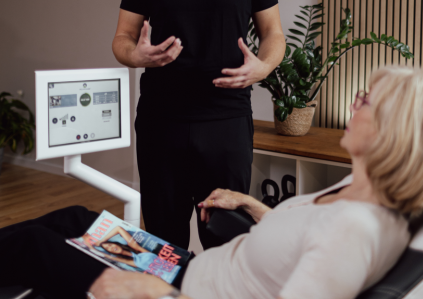
The pelvic floor is a true multi-talent: It holds organs in place, ensures continence, and plays a huge role in your well-being – yet we rarely pay it much attention. Until it speaks to us. Pain, an unfamiliar pressure sensation, or issues with bladder and bowel? Then it's worth taking a look at this often underestimated muscle group. MyPelvi reveals how the pelvic floor is structured and what problems with the pelvic floor entail.
Where is the pelvic floor – and why is it so important?
The pelvic floor is located at the lower end of the torso and, so to speak, closes off the pelvis at the bottom. It consists of several layers of muscle that stretch like a firm, elastic net between the pubic bone, coccyx and the two sitting bones. You can picture it as a kind of hammock or trampoline that supports the organs in the pelvis – the bladder, uterus (in women) and rectum – and holds them in position.
Strictly speaking, the pelvic floor lies within the bony pelvis and closes it off at the bottom. It runs diagonally from the lower front (pubic bone) to the upper back (coccyx), with lateral attachments to the two sitting bones. This means that it does not lie horizontally in the body, but rises slightly upwards.
Its position makes it a central muscle structure that is active in almost all everyday movements – whether standing, walking, lifting, laughing or coughing. Its close cooperation with the deep abdominal muscles, back muscles and diaphragm is especially important. These muscle groups work together as a team to keep your core stable, balance pressure in the abdomen and support important bodily functions such as bladder and bowel control. Healthy pelvic floor muscles also support stability, good body awareness, an upright posture and a confident presence.
Despite its central role, the pelvic floor is not visible from the outside, which is why it is often neglected – until problems arise. This is where MyPelvi pelvic floor training comes in. Our MyPelvi pelvic floor experts are very familiar with the typical challenges affecting the pelvic floor
and work with you to create your individual training plan. Many people notice a change in their body awareness after only a short time:
Ready to begin?Book your MyPelvi trial session now
The three layers of the pelvic floor – A strong team for your core
The pelvic floor is a complex system of three overlapping muscle layers that work together to support organs, control the bladder and bowels, and stabilize the core. Each layer performs its own function and is equipped with specific muscles.
1. The outer layer – the sphincter and control muscles
Musculus sphincter ani externus – external anal sphincter muscle Musculus sphincter urethrae – urethral sphincter muscle Musculus bulbospongiosus – bulbospongiosus muscle Musculus ischiocavernosus – ischiocavernosus muscle Musculus transversus perinei superficialis – superficial transverse perineal muscle The outermost layer of the pelvic floor is the easiest to control because it consists of voluntarily controlled muscles – which means you can consciously contract and relax them. These muscles are directly involved in the closure mechanisms of the urethra and anus. They allow you to control urination and bowel movements and prevent little “accidents” every time you laugh, cough or sneeze. This layer is under particular strain when, for example, your bladder is full and you have to delay going to the toilet.
2. The middle layer – the support system for the organs
Musculus transversus perinei profundus – deep transverse perineal muscle Musculus sphincter urethrovaginalis – sphincter muscle of the urethra and vagina (in women) Musculus compressor urethrae – compressor muscle of the urethra The middle layer of the pelvic floor runs transversely between the two sitting bones and provides a stable connection between the front and back of the pelvis. It is largely responsible for keeping the bladder, uterus (in women) and bowel in place. If this layer is too weak, organs can descend, which may lead to unpleasant prolapse symptoms or even incontinence. At the same time, this muscle layer has a spring-like function and helps absorb pressure from the abdominal cavity – for example when jumping, lifting or during intense physical exertion. If this “spring function” is weakened, e.g. because the muscles have become weaker, MyPelvi pelvic floor training can help your pelvic floor regain its former strength. During 22-minute sessions, all you have to do is sit on the MyPelvi chair and let the chair do its work:
3. The inner layer – the power center of the pelvic floor
Musculus levator ani – levator muscle of the anus (consists of three parts): Musculus pubococcygeus – pubococcygeus muscle Musculus puborectalis – puborectalis muscle Musculus iliococcygeus – iliococcygeus muscle Musculus coccygeus – coccygeus muscle The deepest and strongest layer of the pelvic floor is the inner or “diaphragmatic” layer. It runs like a muscular plate from the pubic bone to the coccyx and is closely connected to the deep abdominal muscles, diaphragm and back muscles. This deep layer provides stability throughout the core and is crucial for upright posture. This layer must counteract strong forces, particularly during pregnancy or heavy physical exertion. If it is too weak or overloaded, back pain, postural problems or pelvic floor dysfunction can occur. With MyPelvi, you have the opportunity to strengthen your pelvic floor down to the deepest layers without breaking a sweat:
How the layers work together – why a strong pelvic floor is so important
These three layers work closely together to keep the pelvic floor functional. A healthy balance between strength and relaxation is crucial – because a pelvic floor that is too weak or overworked can cause symptoms. Regular training, conscious activation and targeted relaxation help keep the pelvic floor healthy and strong so that it can support you optimally in everyday life.
When the pelvic floor causes problems – how to recognise the signs
A healthy pelvic floor works quietly in the background – you are not consciously aware of it, but it ensures that the bladder, bowel and uterus remain stable and that you move safely and powerfully. But if it is weakened or tense, this can have unpleasant consequences. The symptoms can manifest in different ways – from pain and feelings of pressure to problems with the bladder or bowel.
Where does the pelvic floor hurt?
Pelvic floor pain isn't always easy to pinpoint, as it can show up in very different places. Common symptoms include:
A dull pulling sensation in the lower back, similar to tension or poor sitting posture A feeling of pressure in the lower abdomen or even pain in the vagina Discomfort radiating into the thighs or buttocks (especially after long periods of sitting or physical exertion) A feeling of inner tension or persistent, uncomfortable muscle soreness that won't go away
What does a weak pelvic floor feel like?
A weakened pelvic floor can manifest itself in various ways. A classic sign is mild to more severe incontinence – this means that some urine leaks uncontrollably when sneezing, coughing or laughing.
Many of those affected also report a feeling of instability or a “spongy” sensation in the pelvic region, as if the muscles no longer provide proper support.
Another warning sign may be a feeling of heaviness or pressure in the lower abdomen, particularly after standing for a long time or physical exertion. Some people describe it as if “something is pulling downwards” or as if their internal tension has been lost.
MyPelvi pelvic floor training gives you the opportunity to strengthen your pelvic floor. Many people find that the training provides targeted support for more consciously activating the deep muscle layers. In just 22 minutes per session and without any exertion:
Ready to begin?Book your MyPelvi trial session now
Pelvic floor inflammation – what's behind it?
Inflammation in the pelvic floor area can be very unpleasant and manifest itself in different ways. Typical symptoms include burning or stabbing pain in the lower abdomen that sometimes radiates to the groin or lower back.
Increased sensitivity to pressure in the perineal or vaginal area may also indicate inflammation. This is often accompanied by symptoms when urinating, such as burning or frequent urinary urgency, which are reminiscent of a bladder infection.
In some people, pelvic floor inflammation can also cause pain during sexual intercourse that feels like deep pressure or a muscle spasm.
Prolapse symptoms – when organs descend
When the pelvic floor is weakened, organs such as the bladder, uterus or bowel may no longer receive optimal support and can gradually descend. At first, this may manifest itself as a slight feeling of heaviness in the lower abdomen that becomes stronger over the course of the day. Some people feel as though “something is pressing downwards” or as if there is a foreign body in the vagina.
In advanced cases, the bladder or uterus may even noticeably move outwards – a symptom that should always be medically assessed. A dragging pain in the lower back or the feeling of constantly needing to go to the toilet even though the bladder is not full are also typical of pelvic organ prolapse.
Is it the bladder or the uterus?
Pain in the lower abdomen can have many causes, but depending on the type of pain, it is often possible to distinguish between bladder problems and uterine prolapse:
Bladder problems often manifest as an increased urge to urinate, a burning sensation when urinating or the feeling of never being able to empty the bladder completely. Sudden urine leakage during movement can also be an indication of bladder weakness. Pain caused by uterine prolapse, on the other hand, feels more as though “something is pulling downwards”. Those affected often feel pressure in the vagina or as though they are sitting on a foreign object. In some cases, back pain or problems with bowel movements occur.
When should you take action?
Pelvic floor problems are common, but that doesn't mean you have to live with them. The earlier you address them, the easier it is to ease your symptoms – or even avoid them altogether. Regular MyPelvi pelvic floor training, targeted relaxation techniques and mindful posture in everyday life can help strengthen your core and prevent problems.
If you're experiencing persistent pain or feel like your pelvic floor just isn't working the way it should, it's worth getting medical advice or booking your MyPelvi trial session:
Ready to begin?Book your MyPelvi trial session now
Conclusion: Your pelvic floor deserves attention!
Your pelvic floor usually works behind the scenes – until problems arise. Pain, pressure sensations, or bladder issues are signs that it needs support. The good news is: You can strengthen it! Through targeted MyPelvi pelvic floor training and mindful posture, you can alleviate or prevent symptoms. Your pelvic floor is trainable – at any age. So give it the attention it deserves and ensure that it supports you in being strong and stable throughout your life!
Ready for your trial session?
Learn the right technique with guidance — free of charge at your MyPelvi studio.