Upright posture – How to get it right
Discover how you can improve your posture and consciously strengthen your core – with tips on exercise, ergonomics and pelvic floor training.
Katharina Heilen · 18 February 2025
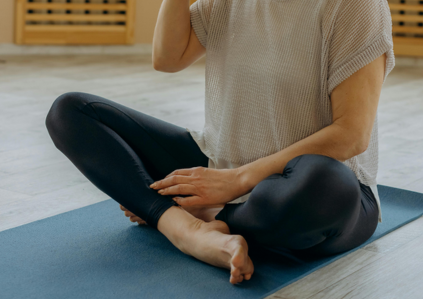
An upright posture often symbolises strength, presence and well-being. What is easily overlooked is that the pelvic floor also plays a role in the interaction of your postural muscles. MyPelvi shows you how to promote good posture while paying attention to your core.
What is upright posture
Balanced from head to toe: An upright posture describes the natural alignment of your body – ideally, your feet, pelvis, spine and head are all in line. Many muscle groups are involved – including the pelvic floor.
This is what a stable posture looks like:
- Head: aligned straight, chin slightly tucked - Shoulders: relaxed, slightly back and down - Ribcage: open, without overextension - Spine: natural S-curve - Pelvis: neutral alignment - Knees and feet: relaxed, hip-width apart, weight distributed evenly - Pelvic floor: can contribute to stability
Common postural deviations – and how you can become consciously aware of them
Many people are familiar with these situations: sitting for long periods, one-sided strain or an inactive core. These postures are usually unconscious – but they can be changed gradually in everyday life.
1. Swayback: This can result from a forward-tilted pelvis and low activity in the abdominal and pelvic region. 2. Rounded back: This often develops from sitting for long periods or a lack of tension in the back. 3. “Tech neck”: The head and neck shift forwards with frequent screen use. 4. Inactive core: A decline in the coordination between the abdominal and pelvic floor muscles can make it harder to maintain an upright posture. 5. One-sided strain: If your weight rests mainly on one leg, this can affect your body's alignment.
Even small changes, such as standing mindfully, activating your core in a targeted way or sitting ergonomically, can provide support.
Can a trained pelvic floor support good posture?
The pelvic floor is part of the so-called core – the deep abdominal, back and pelvic muscles. Together, these muscles form a stable foundation for an upright posture.
Regular training of these deep muscle groups, e.g. through targeted exercises or supportive methods such as the MyPelvi concept, can help improve body awareness and encourage a more conscious approach to posture in everyday life.
How do you train your posture in everyday life?
- Movement: Walks, yoga, or Pilates mobilize and activate key muscle groups. - Strengthening: A strong core – especially through deep, targeted impulses – can build stability. - Awareness: Small adjustments in everyday life help you avoid poor posture. - Ergonomics: Pay attention to good seating, a suitable mattress, and compensatory movement.
MyPelvi pelvic floor training
The MyPelvi seated concept allows your pelvic floor to be trained without active participation – using electromagnetic impulses. This targets the deep muscles. Many users feel that the training supports their body awareness and appreciate how easily it can be integrated into everyday life.
If you would like to find out whether this training is suitable for you, we recommend a no-obligation trial session.
Ready to begin?Book your MyPelvi trial session now
Conclusion
An upright posture results from the interaction of many muscles – including the pelvic floor. Those who begin to activate their core in a targeted way create good conditions for greater balance and stability in everyday life. Supportive input from regular exercise, mindful habits and suitable training methods can help.
Ready for your trial session?
Learn the right technique with guidance — free of charge at your MyPelvi studio.